
Devon Schmid · 27 September 2026
Cambridge Biotech Investments Fuel Innovations for Norfolk's Farming and Coastal Challenges
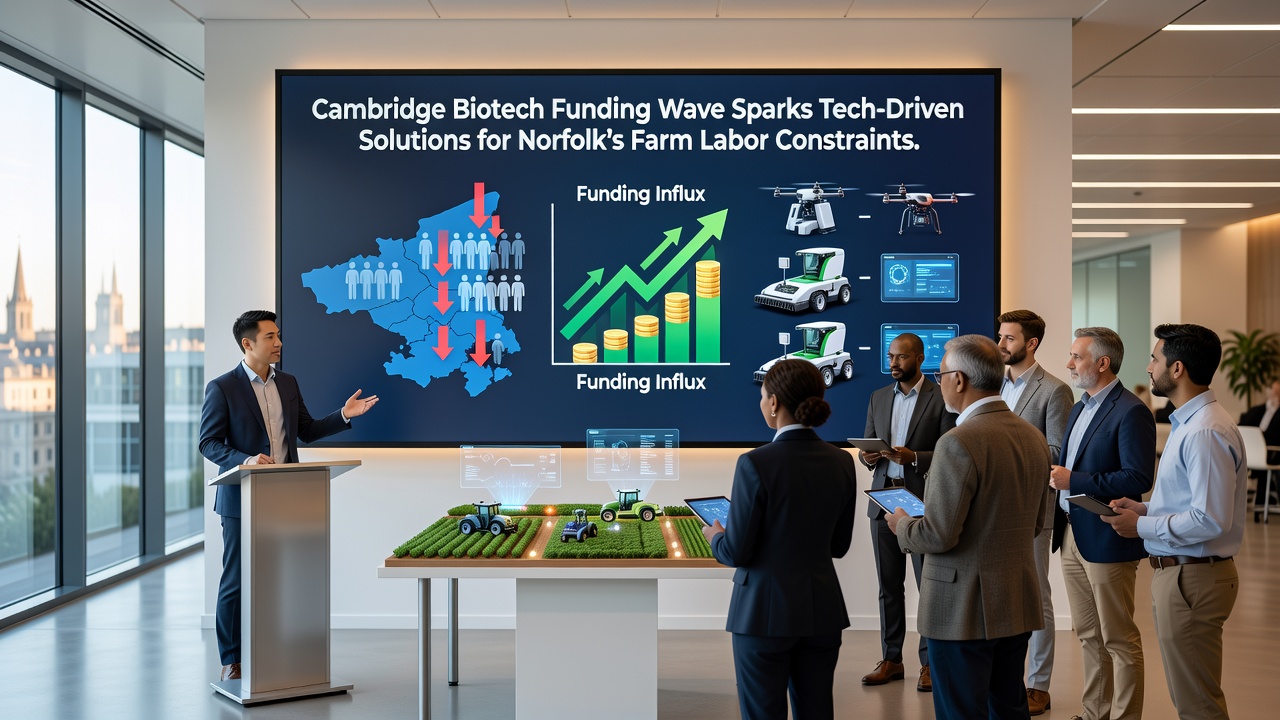
Cambridge has seen a notable increase in biotech funding over recent years, and this capital has begun directing resources toward technologies that address labor shortages in Norfolk agriculture while also supporting coastal resilience efforts. Data from industry reports show that venture investments in the region reached several hundred million pounds by mid-2025, with portions allocated to projects targeting farm automation and environmental monitoring systems.
Funding Patterns and Regional Focus
Investment firms and research institutions based in Cambridge have channeled resources into startups developing precision agriculture tools, and these efforts align with Norfolk's need for efficient crop management amid fluctuating workforce availability. Figures reveal that agricultural biotech companies received approximately 40 percent of recent grants, according to records from the UK Research and Innovation body. Observers note that partnerships between academic labs and local enterprises have accelerated prototype testing for robotic harvesters and sensor networks designed to optimize planting cycles.
Researchers at the University of Cambridge have documented how gene-editing techniques and drone-based monitoring can reduce manual labor requirements by up to 30 percent in certain vegetable crops. These findings come from field trials conducted in partnership with Norfolk growers, where data collection focused on yield improvements and resource use efficiency. The approach integrates artificial intelligence models that predict pest outbreaks, allowing farmers to intervene earlier without expanding staff numbers.
Addressing Labor Constraints in Norfolk Farms
Norfolk's agricultural sector has faced ongoing challenges with seasonal worker availability, and biotech solutions have emerged as one avenue for mitigation. Studies from agricultural extension services indicate that reliance on temporary labor decreased in areas where automated weeding systems were deployed, with adoption rates climbing steadily since 2024. Companies funded through Cambridge channels have introduced machinery that uses computer vision to identify and remove weeds, thereby cutting down on the hours needed for manual removal.
One case involved a consortium that tested soil sensors linked to irrigation controls, and results showed water savings alongside labor reductions because fewer workers were required for monitoring tasks. Government statistics from the Department for Environment, Food and Rural Affairs highlight that Norfolk farms employing these tools reported stable output levels despite workforce fluctuations. Experts have observed that integration of these systems often occurs through training programs offered by the funding recipients, which helps local operators adapt equipment to specific field conditions.
Coastal Vulnerability Mitigation Efforts
Norfolk's coastline experiences erosion and flooding risks that affect both farmland and infrastructure, and biotech-derived monitoring tools have started contributing to early warning capabilities. Funding has supported development of bio-based sensors that track salinity changes and vegetation health in marsh areas, providing data streams that feed into regional planning models. In September 2026, updated assessments from coastal research groups confirmed that such technologies helped refine flood defense strategies by supplying real-time metrics on habitat shifts.
Projects funded in Cambridge have extended their scope to include microbial treatments that strengthen dune grasses against wave action, and initial trials demonstrated improved root stability in test plots. These initiatives draw on biological insights to complement traditional engineering approaches, with data shared through networks involving the Environment Agency. Analysts point out that combining these biological interventions with drone surveys allows for broader coverage of vulnerable stretches without proportional increases in personnel.
Technology Integration and Broader Impacts
Collaboration between biotech developers and Norfolk stakeholders has produced hybrid systems that address both labor and coastal issues simultaneously, such as automated platforms that collect environmental samples while performing crop scouting. Reports from the Biotechnology and Biological Sciences Research Council detail how these platforms use modular designs that adapt to different terrains, including those near the coast where soil salinity varies. Evidence suggests that farms implementing the full suite of tools achieved measurable gains in operational continuity during peak seasons.
Academic papers published through university channels describe algorithms that correlate weather patterns with labor demand forecasts, enabling better scheduling for remaining human tasks. Those who've studied the deployments note that data transparency features built into the software encourage wider adoption among smaller operators who might otherwise hesitate due to complexity concerns. Linkages to international datasets from bodies like the Food and Agriculture Organization of the United Nations have further enhanced predictive accuracy for regional conditions.
Conclusion
Cambridge biotech funding continues to intersect with Norfolk's specific agricultural and coastal needs through targeted technology development, and ongoing projects indicate sustained momentum into future periods. Available records demonstrate measurable contributions to labor efficiency and environmental monitoring, with partnerships driving practical applications across affected areas. As these systems scale, additional data will clarify long-term outcomes for both farm operations and shoreline management.