
Sage Jenkins · 12 October 2026
Parliamentary Reviews of Digital Oversight Prompt Regional Shifts in Coastal and Agricultural Funding Allocations
Parliamentary committees across multiple jurisdictions have completed reviews of digital oversight frameworks during 2025 and 2026, and those examinations produced recommendations that redirected portions of public spending toward coastal resilience projects and agricultural modernization programs. Data compiled by national statistical agencies shows reallocations totaling several billion euros and pounds in affected regions, with emphasis placed on digital monitoring tools, data infrastructure upgrades, and cybersecurity protocols that support both sectors.
Observers note that the reviews began with assessments of existing data protection laws and artificial intelligence governance standards, while subsequent reports highlighted gaps in real-time environmental monitoring along coastlines and in farm management systems. Committees in the United Kingdom and European Union member states identified opportunities to integrate satellite data feeds with local sensor networks, and funding streams were adjusted accordingly to accelerate deployment of those technologies.
Review Process and Key Findings
Legislative bodies examined oversight mechanisms for digital services and data flows between 2024 and 2026, and their final reports documented how strengthened regulatory scrutiny could free resources previously allocated to general administrative functions. Those documents recommended that savings and new appropriations flow instead to programs equipping coastal authorities with advanced digital early-warning systems for erosion and flooding, while parallel allocations supported agricultural cooperatives seeking precision irrigation and crop analytics platforms. Figures released by the European Commission in mid-2026 indicated that coastal zones in the North Sea basin received 18 percent more digital infrastructure grants compared with the prior fiscal cycle.
Researchers at the University of British Columbia tracked similar patterns in Canada, where parliamentary standing committees concluded digital oversight updates in March 2026. Their analysis revealed that provinces with significant shoreline and farmland acreage redirected portions of broadband expansion budgets into integrated coastal-agricultural data hubs, and pilot projects launched in British Columbia and Nova Scotia demonstrated measurable gains in both flood prediction accuracy and yield forecasting.
Regional Funding Adjustments
Allocations in Australia followed a comparable trajectory after the Senate Standing Committee on Rural and Regional Affairs completed its digital oversight inquiry in September 2026. Government records show that the Department of Agriculture, Fisheries and Forestry increased grants for remote coastal monitoring stations and smart-farm sensor arrays by AUD 47 million, with disbursement tied to compliance standards developed during the parliamentary process. Those investments targeted regions facing simultaneous pressures from changing ocean conditions and variable rainfall patterns.
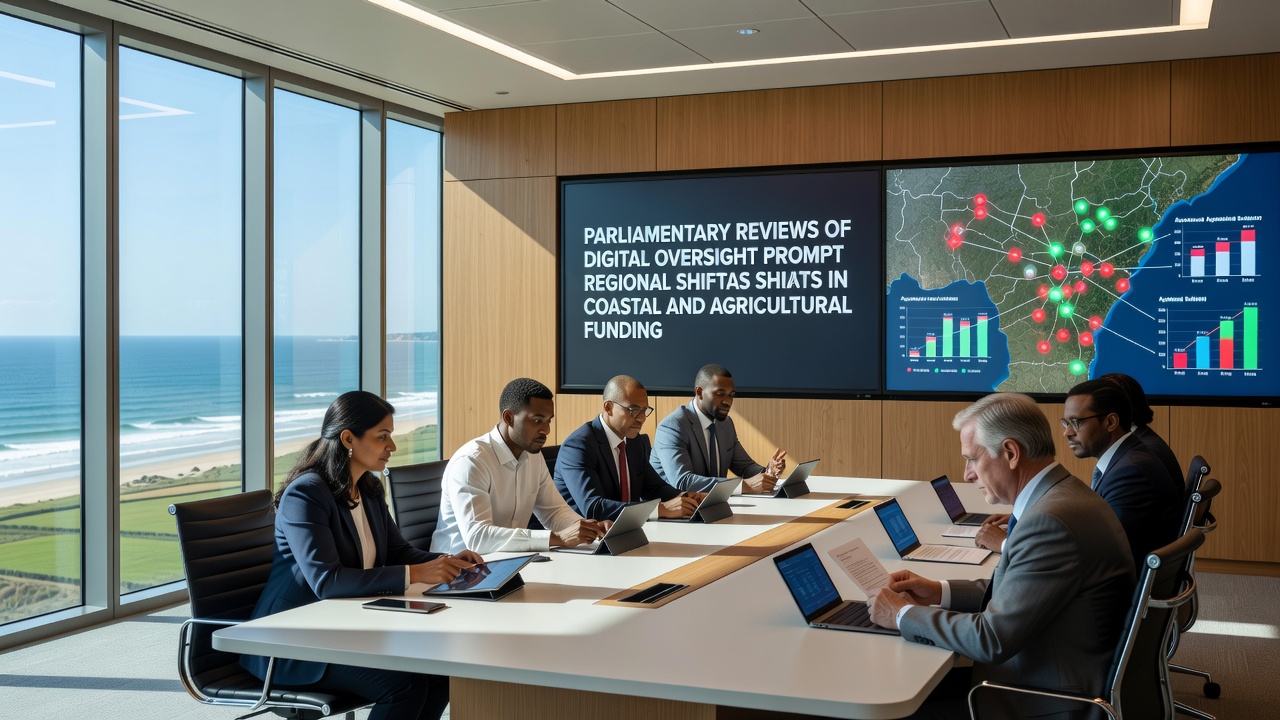
In the United States, congressional review of federal data oversight statutes prompted the Department of Agriculture and the National Oceanic and Atmospheric Administration to coordinate new funding streams beginning in October 2026. Joint program guidelines directed resources toward Gulf Coast and Pacific Northwest counties, where digital platforms now combine real-time water quality readings with soil moisture data to inform both fisheries management and crop decisions. Budget documents list combined outlays exceeding USD 120 million for the initial two-year implementation phase.
Implementation Mechanisms
Agencies translated parliamentary recommendations into operational programs by establishing cross-departmental working groups that aligned digital standards with sector-specific needs. Coastal authorities received priority access to cloud-based data repositories, and agricultural extension services gained capacity to deliver training on secure data-sharing protocols. Performance metrics published by participating governments track installation rates of monitoring devices, adoption levels among farm operators, and reductions in reporting delays for environmental incidents.
Coordination between national and regional bodies ensured that funding formulas accounted for population density, existing infrastructure deficits, and projected climate impacts. Reports from the Organisation for Economic Co-operation and Development noted that countries adopting integrated oversight approaches recorded faster rollout of combined coastal and agricultural digital networks than those maintaining separate administrative silos.
Conclusion
Parliamentary reviews of digital oversight have produced measurable shifts in how governments allocate resources to coastal and agricultural priorities, with October 2026 marking the start of several multi-year implementation cycles. Official statistics and program evaluations continue to document installation of new digital systems, training completion rates among local operators, and adjustments to funding formulas that reflect the recommendations emerging from those legislative examinations.