Devon Schmid · 13 September 2026
UK Cities Test Hybrid Ownership Models for Public Transit Networks
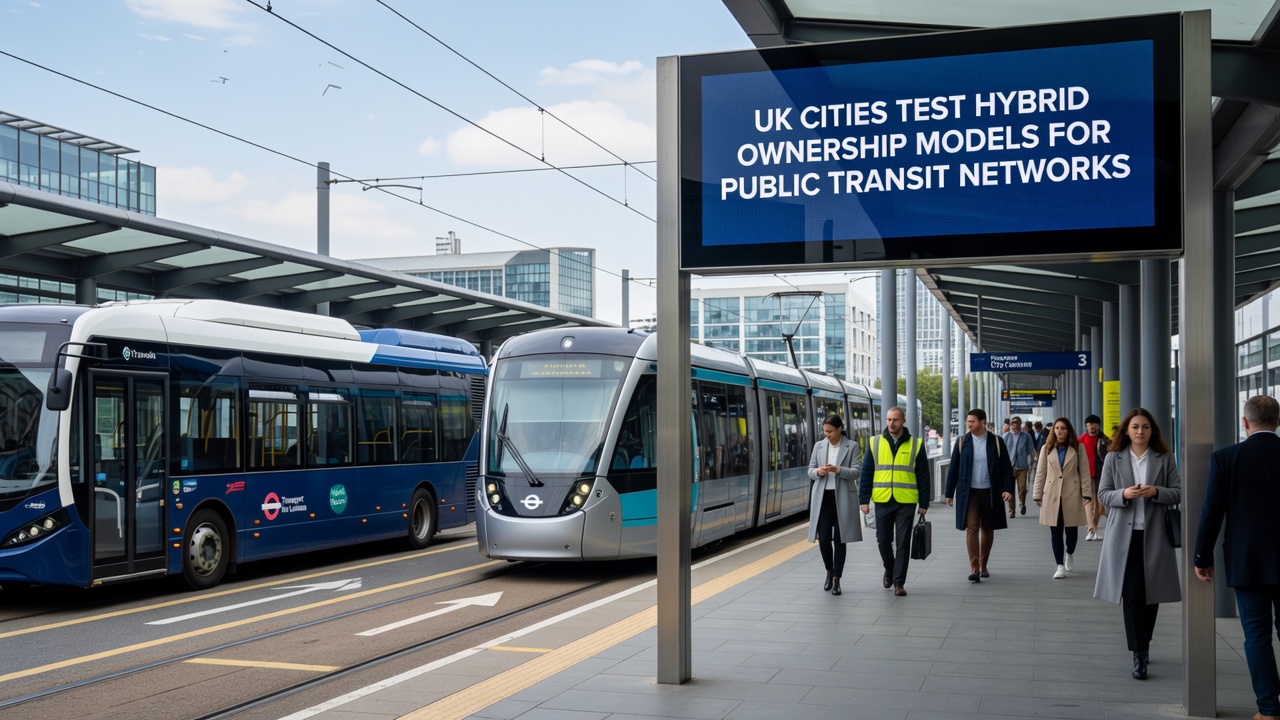
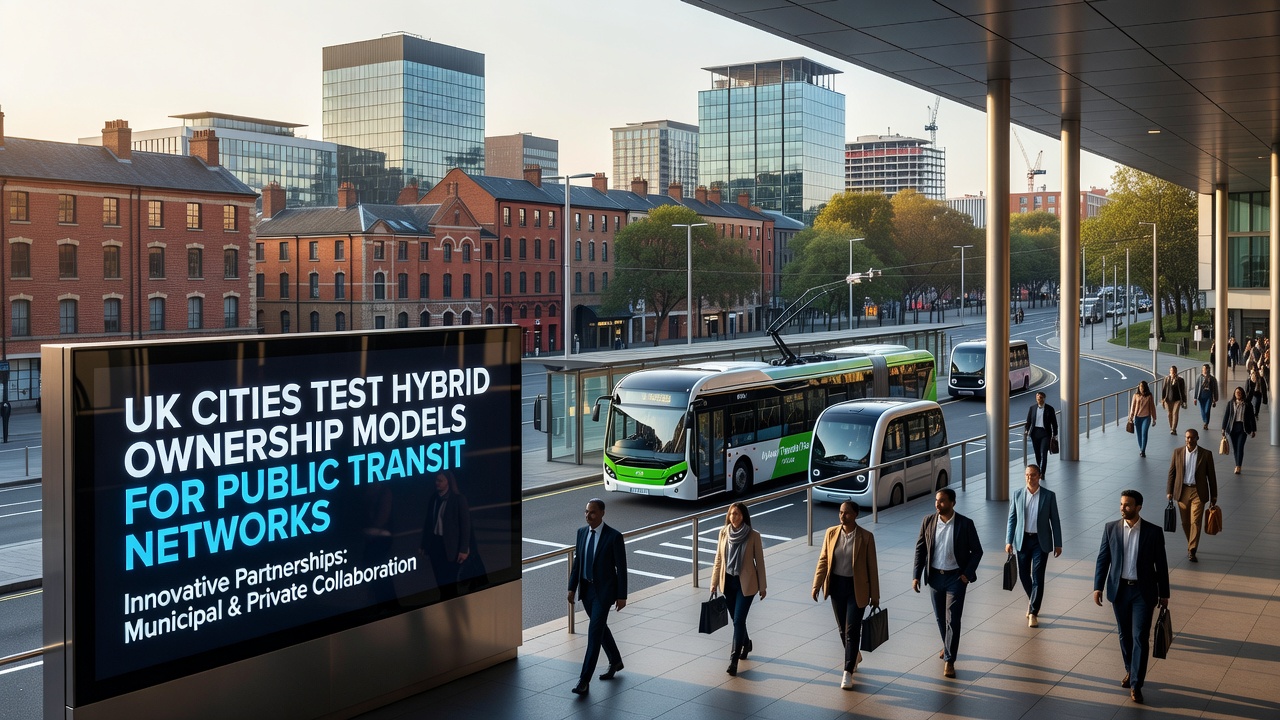
UK cities have begun rolling out hybrid ownership models that blend public oversight with private operation across bus, tram and rail networks, and these experiments gained momentum through September 2026 as several metropolitan authorities published interim performance data. Manchester, Birmingham and Glasgow each adopted distinct structures that keep strategic planning and fare-setting in municipal hands while contracting day-to-day service delivery to commercial partners under long-term agreements.
Background on the Shift
Local transport authorities faced rising subsidy costs and uneven service quality after the pandemic, so they examined frameworks that had already been tested in continental Europe and parts of North America. Data from the UK Department for Transport showed operating costs per passenger kilometre rising 14 percent between 2019 and 2024 in fully privatised bus markets, prompting councils to explore shared-risk arrangements instead. Hybrid models allocate revenue risk differently: the public body guarantees a minimum service level and retains ticket income, while the operator receives a management fee plus performance bonuses tied to punctuality and passenger growth targets.
Manchester's Trailblazer Programme
Greater Manchester launched its Bee Network hybrid structure in 2025 and expanded franchising zones through September 2026, bringing an additional 180 routes under joint control. Transport for Greater Manchester sets routes and frequencies, yet private firms such as Go-Ahead and Stagecoach operate the vehicles under eight-year contracts that include strict emissions and accessibility clauses. Early figures released in September 2026 indicated a 9 percent rise in weekday ridership compared with the same period in 2024, while subsidy per passenger fell 6 percent once patronage recovered.
Birmingham and West Midlands Approach
West Midlands Combined Authority chose a different balance by retaining ownership of its tram fleet and track while awarding operations to a private consortium. The arrangement, formalised in early 2026, requires the operator to meet headway standards during peak hours or face financial penalties that escalate after repeated shortfalls. Passenger surveys conducted by the authority recorded satisfaction scores climbing from 72 percent to 81 percent within the first six months of the new regime.
Scottish and Welsh Experiments
Edinburgh and Cardiff introduced smaller-scale pilots focused on evening and weekend services where demand fluctuates sharply. In both cities the public authority owns the vehicles and leases them to operators under gross-cost contracts, removing revenue risk from the private partner. A joint report compiled by Transport Scotland and the Welsh Government in September 2026 noted that these targeted contracts reduced the average cost per service kilometre by 11 percent compared with the previous net-cost model.
Data and Performance Indicators
Across the three largest schemes, combined patronage reached 287 million passenger journeys in the 12 months ending September 2026, according to statistics published by the Office of Rail and Road. Punctuality improved in Manchester and Birmingham, with 87 percent of buses arriving within five minutes of schedule, while Edinburgh's evening services posted an 83 percent on-time rate. Researchers at the University of Leeds Institute for Transport Studies tracked these outcomes and observed that hybrid contracts with clear performance metrics delivered more consistent results than either pure public operation or fully deregulated markets.
External Benchmarks
Observers have drawn parallels with systems operating in Vancouver and Melbourne, where similar risk-sharing agreements have run for more than a decade. A 2025 study by the Organisation for Economic Co-operation and Development examined 22 metropolitan regions and concluded that hybrid models produced the strongest ridership recovery when public authorities retained fare policy control. UK schemes now supply additional case material for that ongoing international comparison.
Operational Challenges Encountered
Transition periods brought integration issues, particularly around data sharing between legacy ticketing systems and new operator platforms. Birmingham experienced a three-week period of duplicated services on several corridors while timetables were reconciled, yet the authority reported that passenger complaints fell once the overlap was resolved. Glasgow's pilot encountered driver recruitment shortfalls that delayed the launch of two new routes until late summer 2026, highlighting the continued importance of workforce planning within hybrid frameworks.
Future Outlook Through 2027
Additional cities including Leeds, Bristol and Newcastle have signalled interest in adopting comparable structures once current pilots complete their first full-year evaluations. Central government has indicated it will publish updated guidance on franchising powers by spring 2027, drawing on the September 2026 datasets already released by Manchester, Birmingham and the Scottish and Welsh authorities. Those evaluations will determine whether the hybrid approach scales beyond the initial test cities or requires further contractual refinements.
Conclusion
Hybrid ownership models continue to evolve across UK public transit networks as authorities balance cost control with service reliability, and the September 2026 performance reports provide the first substantial evidence base for assessing their effectiveness at metropolitan scale. Cities that maintain clear public oversight of planning and fares while contracting operations under measurable standards have recorded measurable gains in both ridership and cost efficiency, though workforce and data-integration hurdles remain part of the implementation process.