Jakob Braun · 25 October 2026
UK Laboratories Accelerate Experiments on Lab-Produced Proteins for Environmentally Friendly Animal Feed
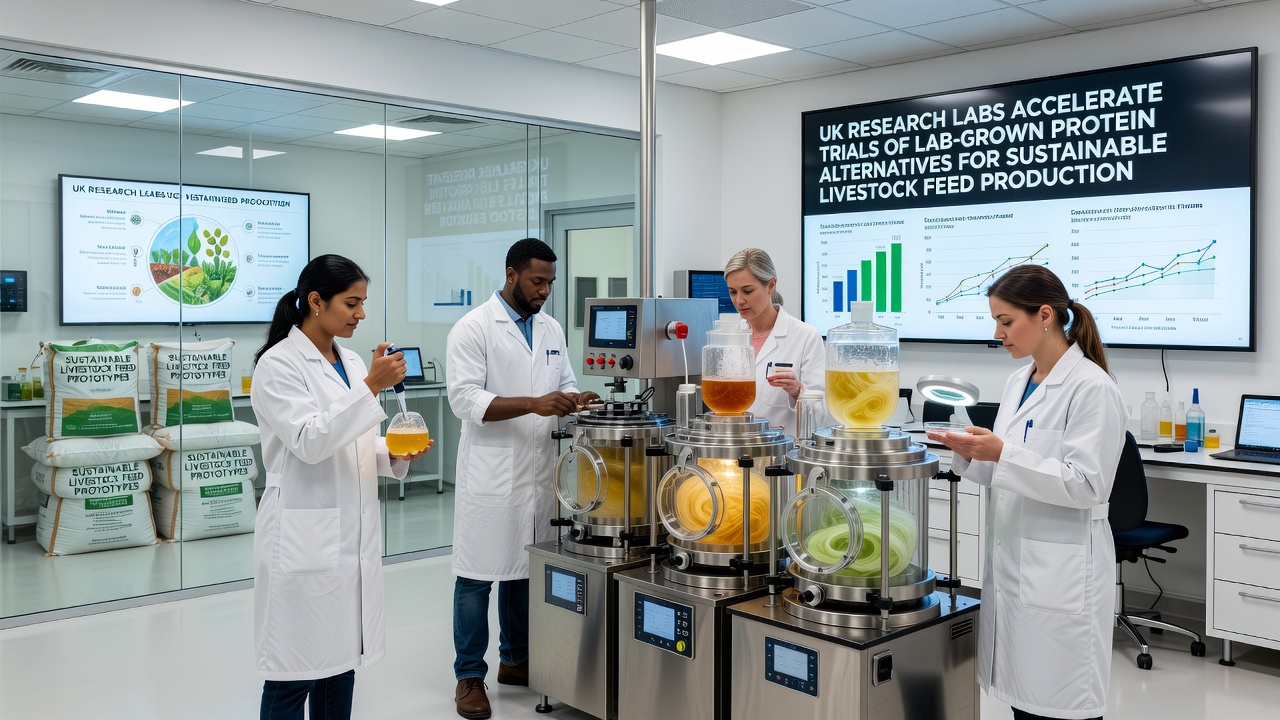
UK research facilities have stepped up their work on lab-grown protein sources that could replace traditional soy and fishmeal in livestock diets, and these efforts focus on reducing the environmental footprint of animal agriculture while maintaining nutritional standards. Facilities across England and Scotland run multiple trial phases that test single-cell proteins, algal derivatives, and precision-fermented products for their digestibility and safety in poultry, swine, and cattle rations.
Background on Protein Demand in Livestock Production
Global demand for high-quality protein ingredients continues to rise as meat and dairy output expands to meet population growth, yet conventional sources such as soybean meal place pressure on land use and import logistics. UK data from agricultural statistics show that the country imports over 2 million tonnes of soy annually for feed, and researchers have identified alternative cultivation methods that grow protein in bioreactors rather than fields. These methods rely on microorganisms or engineered cell lines fed with sugars or waste streams, which cuts the need for arable land and imported commodities.
Key UK Research Sites and Trial Phases
The Biotechnology and Biological Sciences Research Council funds several programmes that bring together academic teams and commercial partners, and one notable cluster operates at the Norwich Research Park where microbial fermentation tanks produce protein biomass at pilot scale. Another site in Aberdeenshire tests algal strains that thrive in closed-loop systems, while a facility near Bristol evaluates precision fermentation outputs for amino acid profiles that match or exceed those of fishmeal. Trials scheduled to expand in October 2026 will introduce larger cohorts of animals to measure growth rates, feed conversion ratios, and any metabolic markers over full production cycles.
Observers note that these sites share data through a coordinated network that standardises measurement protocols, and the approach allows faster iteration when early results indicate adjustments to culture conditions or downstream processing. Equipment upgrades completed in 2025 now support continuous fermentation runs that last several weeks, which improves yield consistency compared with batch methods used in earlier studies.
Technical Approaches Under Evaluation
Three main platforms dominate current experiments. The first uses bacteria such as Methylophilus methylotrophus grown on methanol or methane, the second employs yeast and filamentous fungi that convert agricultural residues into protein-rich biomass, and the third applies precision fermentation to secrete specific functional proteins like enzymes or bioactive peptides. Each platform undergoes safety assessments that screen for toxins, heavy metals, and microbial contaminants before any material advances to animal feeding studies.
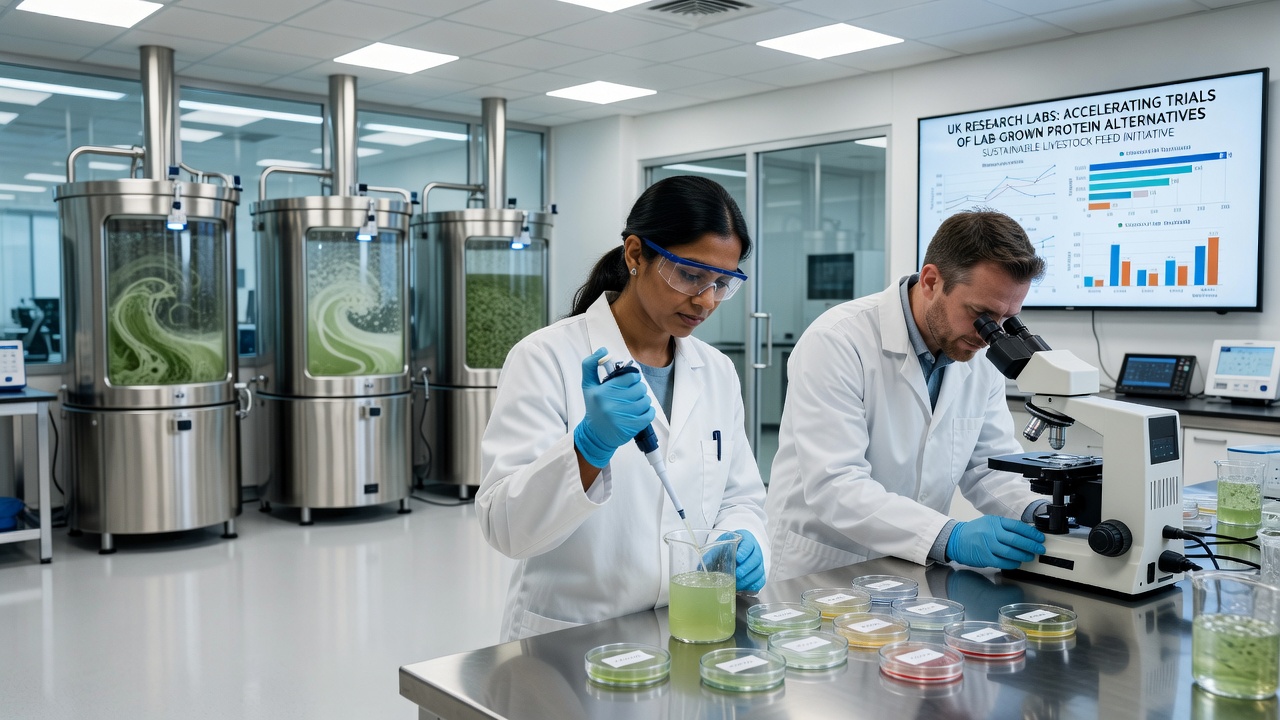
Researchers measure crude protein content, essential amino acid balance, and digestibility coefficients through standardised in vitro and in vivo assays, and results feed directly into formulation software used by commercial feed mills. One study revealed that certain fungal proteins achieved 92 percent apparent digestibility in broiler chickens, which compares favourably with soybean meal benchmarks reported in peer-reviewed literature.
Regulatory and Funding Landscape
The Food Standards Agency oversees novel food approvals for these ingredients when they enter the human food chain indirectly through animal products, and parallel guidance from the Department for Environment, Food and Rural Affairs addresses environmental permitting for large-scale bioreactors. Funding rounds in 2024 and 2025 allocated £47 million across nine collaborative projects, drawing contributions from both public grants and private investors who see long-term supply-chain resilience as a commercial opportunity. International partners from Canada and Australia contribute comparative datasets on similar fermentation technologies, which broadens the evidence base without duplicating UK-specific trials.
Environmental and Economic Metrics
Life-cycle assessments conducted by independent consultants show that microbial protein production can reduce land use by up to 90 percent and water consumption by 70 percent relative to soy cultivation, while greenhouse gas emissions vary depending on the energy source powering the bioreactors. Economic models project that domestic production could stabilise feed prices against global commodity swings, and several feed companies have already signed memoranda of understanding to purchase output once regulatory clearances are complete. Figures from the Office for National Statistics indicate that teh UK animal feed sector contributes £4.2 billion to gross value added, which underscores the potential scale of any successful substitution.
Challenges and Next Steps
Scale-up remains the primary hurdle because current pilot plants produce tonnes rather than the hundreds of thousands of tonnes needed to displace a meaningful share of imported protein. Energy intensity of fermentation and downstream drying steps also draws scrutiny, and teams continue to explore renewable electricity contracts and heat recovery systems to lower operational footprints. Public engagement exercises run by the participating universities gather farmer and consumer perspectives on acceptance of products derived from animals fed these new ingredients.
Conclusion
UK research programmes continue to generate data that support the viability of lab-grown proteins as sustainable feed components, and the coordinated trials set for October 2026 will provide the largest animal performance datasets assembled to date in this field. Progress depends on sustained investment, clear regulatory pathways, and integration with existing supply chains, yet the technical foundations already established position the sector for incremental adoption over the coming decade.